Best Ways to Relax and Unwind After a Busy Day

A busy day can leave the body sitting on the couch while the mind keeps running laps. Dinner is done, the messages are answered, the shoes are off, and somehow the day still feels like it is clinging to you.
Relaxing after a long day is not just about having free time. It is about helping your nervous system shift from “go mode” into rest. The good news is that the best ways to relax do not need to be expensive, complicated, or time-consuming. Small rituals can make the evening feel calmer and more your own.

Start by creating a clear break from the day
The first step to unwinding is giving the day a clear endpoint. Without that signal, work stress, errands, and mental lists can bleed into the whole evening.
A transition ritual helps your brain understand that one part of the day is over. It does not have to be dramatic. Try choosing one simple action you repeat most evenings.
Good transition rituals include:
Changing into comfortable clothes
Washing your face or taking a quick shower
Making tea or sparkling water
Stepping outside for five minutes
Dimming the lights
Playing the same calm playlist
The key is consistency. A repeated cue tells your mind, “We are done with the demanding part now.”
If you work from home, this matters even more. Close the laptop, put away work materials, and leave the room if possible. If you cannot leave the space, change the lighting or move to a different chair. Physical cues help create mental separation.
Move your body without making it another task
Exercise can help release tension, but not every evening needs a workout. After a demanding day, gentle movement often works better than forcing yourself through a hard routine.
Think low-pressure movement. A short walk around the neighborhood, light stretching, slow yoga, or a few minutes of shoulder rolls can ease stiffness and help clear mental clutter.
Try this simple five-minute reset:
Roll your shoulders slowly 10 times.
Stretch your neck from side to side.
Reach both arms overhead and breathe deeply.
Fold forward gently and let your head hang.
Walk around your home or outside at an easy pace.
The goal is not performance. The goal is to reconnect with your body and release the tension that built up during the day.

Calm your mind with something simple and absorbing
A tired mind does not always need silence. Sometimes it needs a low-stakes activity that gives it somewhere pleasant to land.
Choose something that keeps your hands or attention lightly engaged without demanding too much from you. This helps break the loop of replaying conversations, worrying about tomorrow, or scrolling without meaning to.
Helpful options include:
Reading a chapter of a novel
Doing a puzzle
Coloring or sketching
Knitting, crocheting, or mending clothes
Cooking a simple meal
Listening to calm music
Playing with a pet
These activities work because they are absorbing but not urgent. They give your brain a soft focus.
If you tend to reach for your phone, set a small boundary. Place it across the room for 20 minutes. You do not need a perfect digital detox. You just need enough space to notice what actually helps you feel restored.
A relaxing evening is easier to build when it feels inviting, not strict.
Use your senses to settle your nervous system
The senses are powerful shortcuts to calm. They bring attention back to the present instead of letting the mind spin through unfinished thoughts.
Start with the environment. Lower bright lights if you can. Turn off harsh overhead lighting and use a lamp instead. Put on comfortable clothes. Adjust the temperature. Clear one small surface, such as a coffee table or kitchen counter, so the room feels less busy.
Then add one or two soothing sensory cues:
Touch
Wrap up in a soft blanket, take a warm bath, or use a heating pad.
Smell
Use lavender, eucalyptus, citrus, or another scent you enjoy.
Sound
Play quiet music, rain sounds, or a familiar audiobook.
Taste
Make herbal tea, warm milk, or a simple evening snack.
Breathing also fits here because it gives the body a direct calming signal. Try breathing in for four counts and out for six counts. Repeat for a few minutes. Longer exhales can help the body shift toward a more relaxed state.

Let go of the pressure to relax perfectly
One reason people struggle to unwind is that relaxation becomes another thing to do “right.” You might feel like you should meditate for 30 minutes, cook a healthy dinner, journal, stretch, and get eight hours of sleep every night.
That kind of pressure defeats the purpose.
Instead, build a small menu of calming options and choose based on the evening you are having. Some nights, you may have energy for a walk and a bath. Other nights, brushing your teeth early and lying under a blanket is enough.
A simple evening menu might look like this:
For mental overload Put your phone away, write tomorrow’s top three tasks, and listen to music.
For physical tension Stretch for five minutes, take a warm shower, and wear comfortable clothes.
For emotional stress Call someone kind, journal for 10 minutes, or watch something gentle.
For total exhaustion Eat something simple, lower the lights, and go to bed early.
Relaxation should meet the real version of your day, not the ideal version.
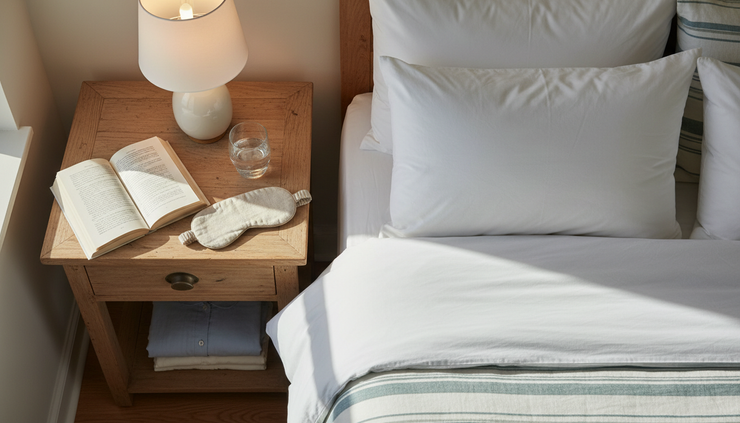
Build a wind-down routine that helps you sleep
A good evening routine does not need to be long. In fact, the best one is usually repeatable on a normal weeknight.
Try setting a loose “landing zone” for the last 30 to 60 minutes before bed. During that time, aim for calmer inputs and fewer decisions. Prepare what you can for the morning, then stop problem-solving for the night.
A practical wind-down routine might include:
Tidy one small area for two minutes.
Set out clothes or essentials for the next day.
Dim the lights.
Put your phone on charge away from the bed.
Read, stretch, or breathe quietly.
Keep bedtime roughly consistent.
This routine works because it lowers friction. Tomorrow feels less chaotic, and tonight feels more peaceful.
Make relaxation something you can actually repeat
The best ways to relax and unwind after a busy day are the ones that fit into real life. A short walk counts. A warm shower counts. Ten quiet minutes with tea counts. So does turning off the TV a little earlier and letting the room get still.
Start with one calming habit and repeat it for a week. Keep it small enough that you can do it even when the day has been messy. Over time, that small ritual becomes a reliable signal that the day is done, your body can soften, and the evening belongs to you again.


Comments